(The first publication of this text appeared in Bulgarian in issue no. 29 of Literaturen Vestnik, Literary Newspaper. The present expanded English version develops further the play, already implicit in the Bulgarian, between the title of the exhibition “OT” as a combination of two Glagolitic letters and “от”, a preposition in Bulgarian meaning “from”, a word that establishes relations of origin and departure in both time and space. In English, this wordplay is necessarily transformed: OT is turned into TO, which is itself a preposition, marking movement or direction towards a place or point in time. OT becomes TO; from becomes to. And so on…)
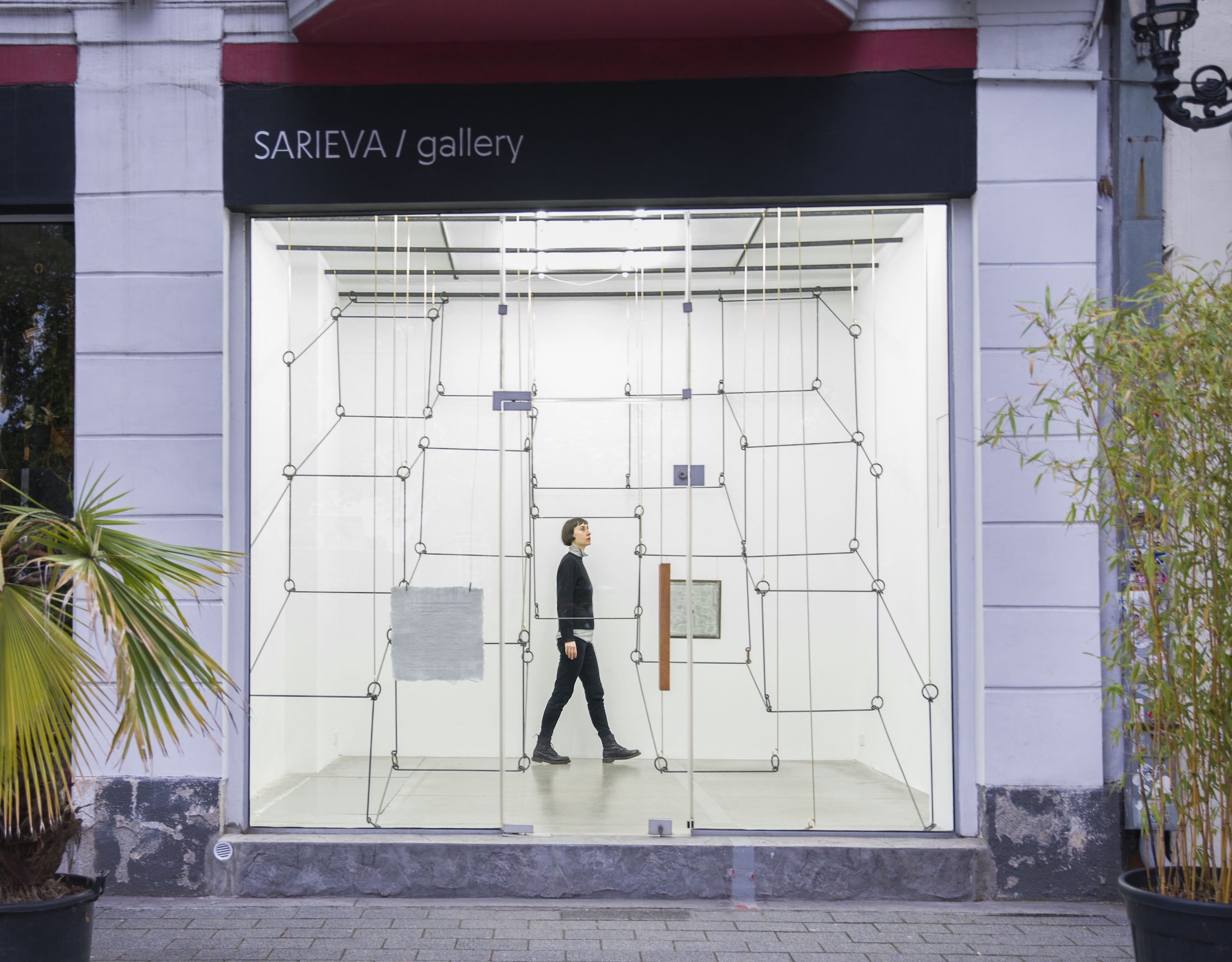
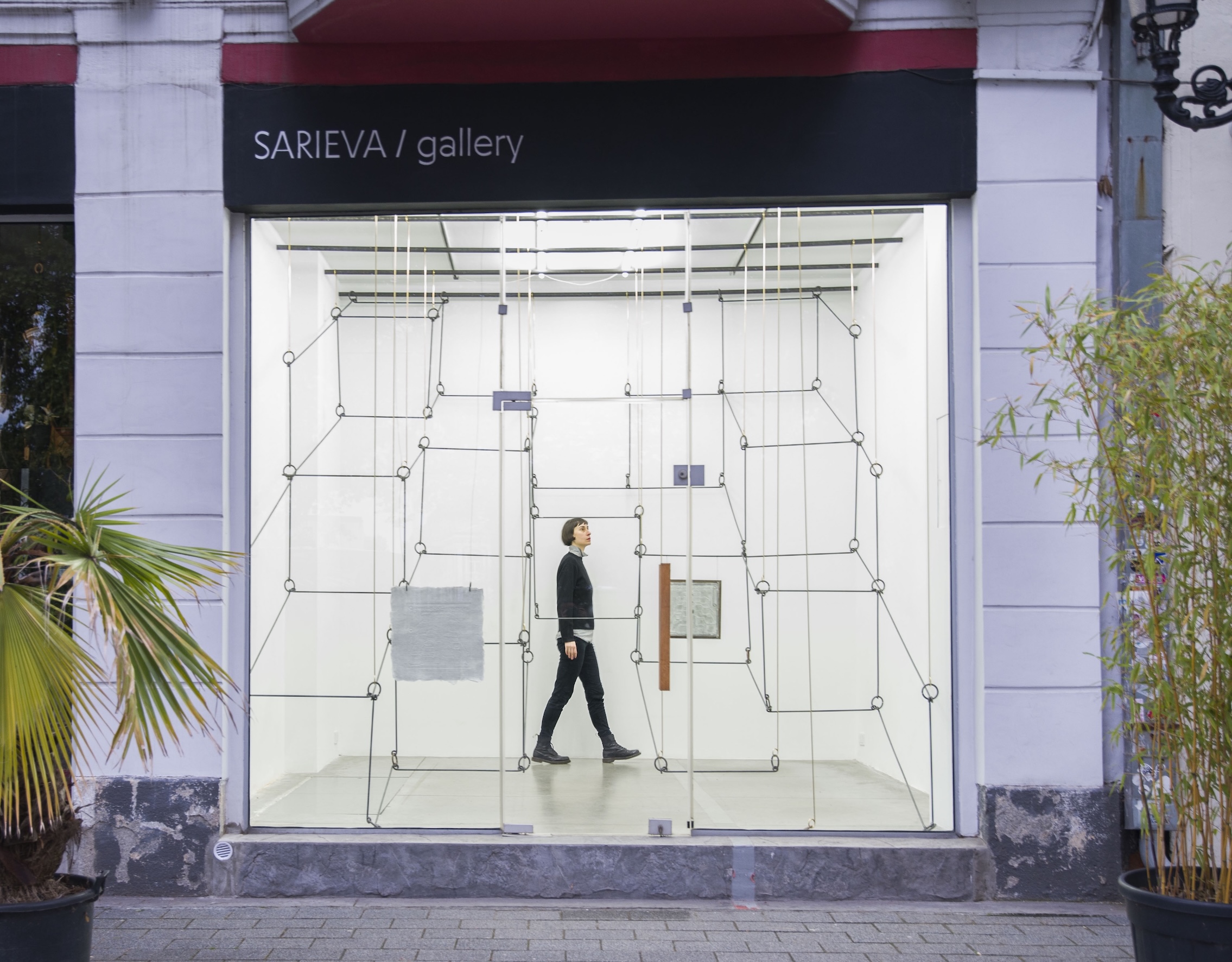
On the last and exceedingly rainy day of April this year, the sculptor Petar Nakov’s debut solo exhibition “OT” opened at Sarieva Gallery in Plovdiv. The site-specific project, curated by Ivaylo Avramov as part of a larger programme of collaboration between him and the gallery, entitled “Breakthrough in the White Cube”, activates the memory of the space in a peculiar way.
I. OT → TO
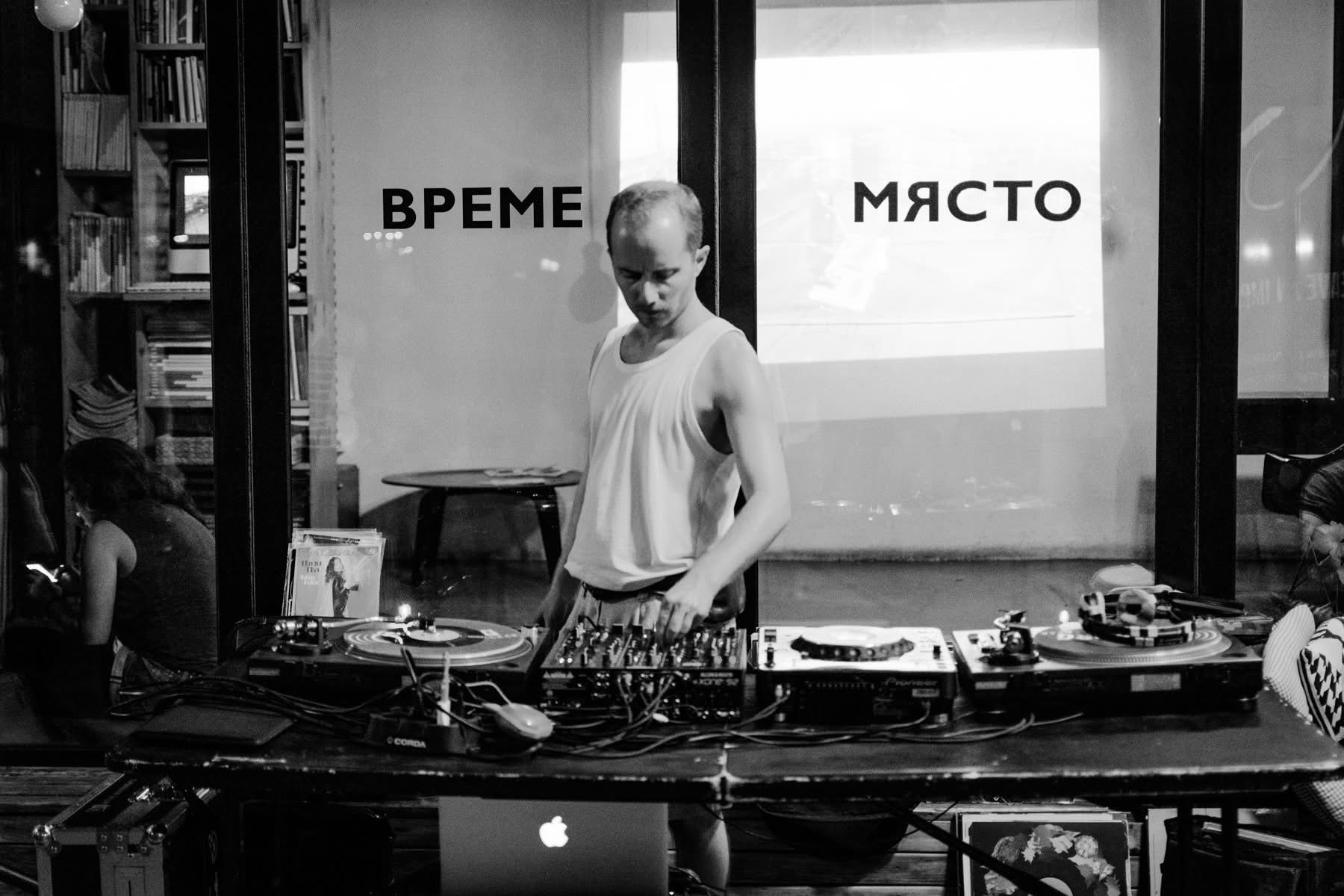
I was supposed to begin this text with a work by the artist Svetlana Mircheva, who, until the closure of the artnewscafé (a community space, café, library, and information center for art, lifestyle, and urban culture) next door to Sarieva Gallery in 2024, used to draw the gaze of otherwise indifferent passersby on Plovdiv’s Otets Paisiy Street – two words made of self-adhesive black foil on the café’s windows, which I remembered as “HERE EVERYWHERE”. As it turned out, however, those two words were “TIME PLACE”. “HERE EVERYWHERE”, I remembered, was the title, as well as the motto, of the exhibition curated by Vladiya Mihaylova on the occasion of the tenth anniversary of the Open Arts Foundation. Now that I’ve recalled it, I tentatively begin this first part of the text with Svetlana Mircheva’s work “TIME PLACE” – initially just the title of the artist’s 2009 exhibition at artnewscafé, but later enduring over time (and withstanding the weather conditions) and crystallizing into a work of art. Let’s think about this text already underway in the freedom that this false memory can offer.
1. From the press release for the exhibition “OT”, published on the gallery’s website, we learn that the project is accompanied by three texts, one of which, at first glance, appears unrelated to the particular occasion – “An Intention for a Chronology…” – a detailed attempt to tell the history of Sarieva Gallery. In recounting time and through time, the chronology in fact speaks of a series of conceptual, programmatic, and spatial transformations in which each successive form simultaneously inherits the previous one and undoes it, opening up a space for a new mode of working and of thinking itself. History, it turns out, despite the form this intention has taken, is not linear but reflexive and relational – leaping over and anticipating itself. The institution continually invents and dismantles itself, periodically returning to itself, renaming itself, stripping its walls and façade bare, multiplying, changing its own conditions of visibility. It negates itself and thus affirms itself, and in affirming itself, negates itself. The space remains, regardless of its usual and original function. The space remains even when the place disappears – but more on that shortly.
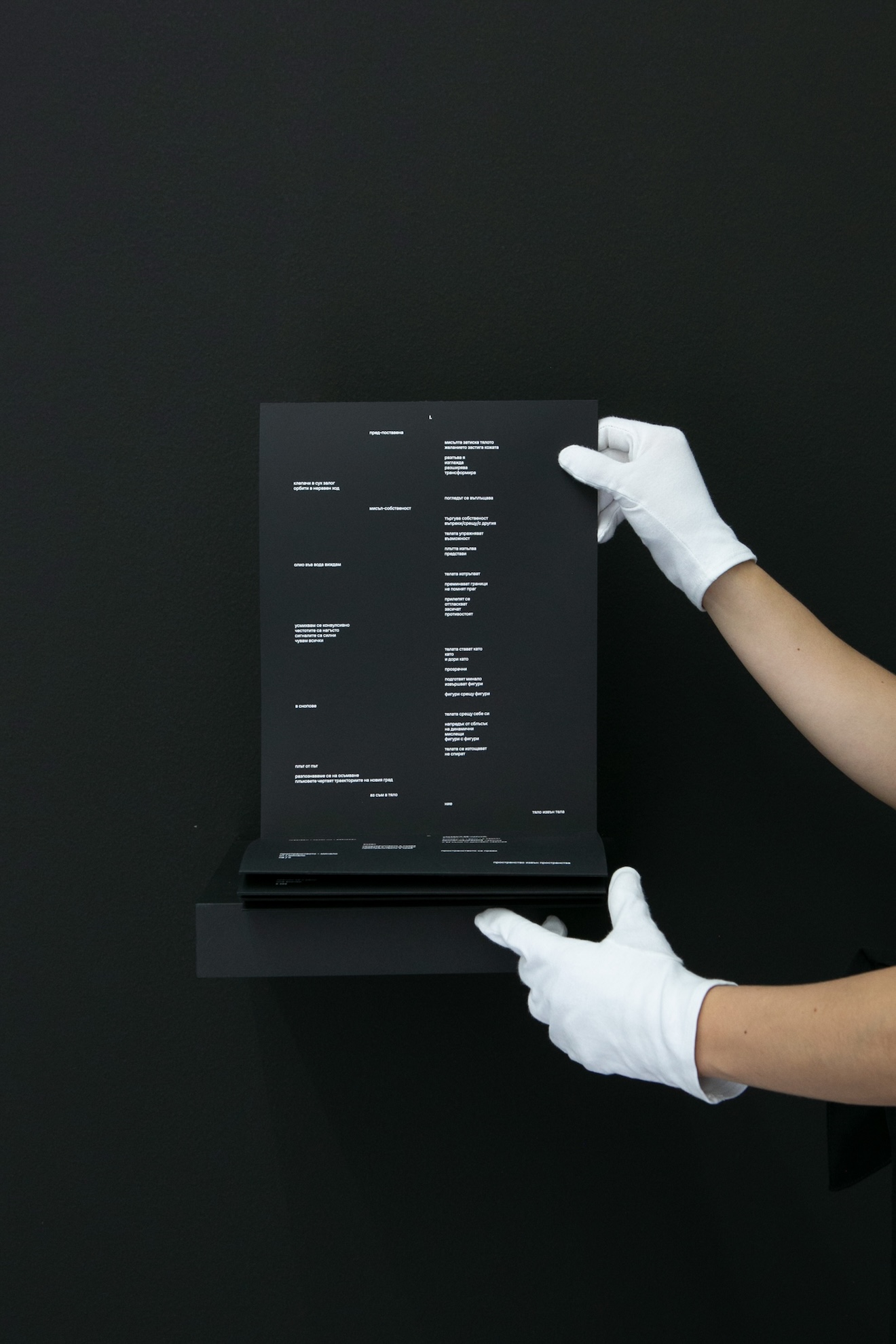
2. Vesselina Sarieva completed her poem “magia naturalis” in June 2020. Later that same month and in the same year, it was presented in an exhibition of the same title at the gallery, which at the time still bore the name “Sariev,” curated in collaboration with Boyan Manchev. The poem, at once prophetic (external to itself) and manifest-like (constituting one thing while promising the same), imagines, among other things, a new model for thinking about the future of the art institution. A performative, polyphonic text, organized precisely through its ramifications, it quickly begins to function as an initiating gesture. A little more than a year later, the gallery will add the feminine ending “a” to its name and become “Sarieva” – just as Pinocchio wishes to become a real boy, a boy like you and like all his other friends, the gallery will wish to become a girl, a girl like no other. It will attempt to abandon the hierarchical model of growing up within the art world and dare to speak of horizontality, intimacy, sharing, and collaboration – of everything otherwise obvious. It will begin to think of itself as a gallery situation, and this, for better or worse, will have nothing to do with Situationism. A network. The transformation will become the occasion for numerous and richly documented projects and exhibitions (including Elena Chergilanova’s study “Off-Spaces & Non-Places”). The gallery will appear destroyed, or under deconstruction, quoting a work by the artist Stefan Nikolaev, represented by the gallery. But allow me to return to where we began. In “magia naturalis”, Sarieva speaks both of space and of place – “space is made”, but also “I make a new place”, and later “space outside spaces”. If space appears and sounds like an endless field of possibilities (potentialities), place is its condensation in time. It does not precede action but emerges through it, though not quite because of it. The new place is not an address but an effect of the sustained reorganization of relations, images, bodies, and language. Space is a verb, if I may permit myself this somewhat careless paraphrase. In the poem, it appears through a series of technical operations – folding, bending, pressing, accumulating, rhyming. The artistic, and therefore also the political, act ceases to describe and serve space and becomes its continuous re-establishment. Elsewhere in the text, Sarieva says, “space is destiny”. And that will suffice for now.
II. TO → OT
Preparing to write the present text sent me to the Facebook wall of the exhibition’s curator, Ivaylo Avramov. There, in a post from late October last year in which he discusses one of his works, he divides the text into two parts – the first created with the assistance of A.I., the second without it. For some reason, I was thinking of staging this structure in the present text. Unfortunately, ChatGPT was not particularly certain whether the project “OT” was based on the Glagolitic letters on and tverdo, or on the letter ot, created and used solely to reproduce the Greek letter omega. It then explained to me what a ligature was and finally suggested, as an epigraph for my text, a line from the deathbed prayer of Saint Cyril.
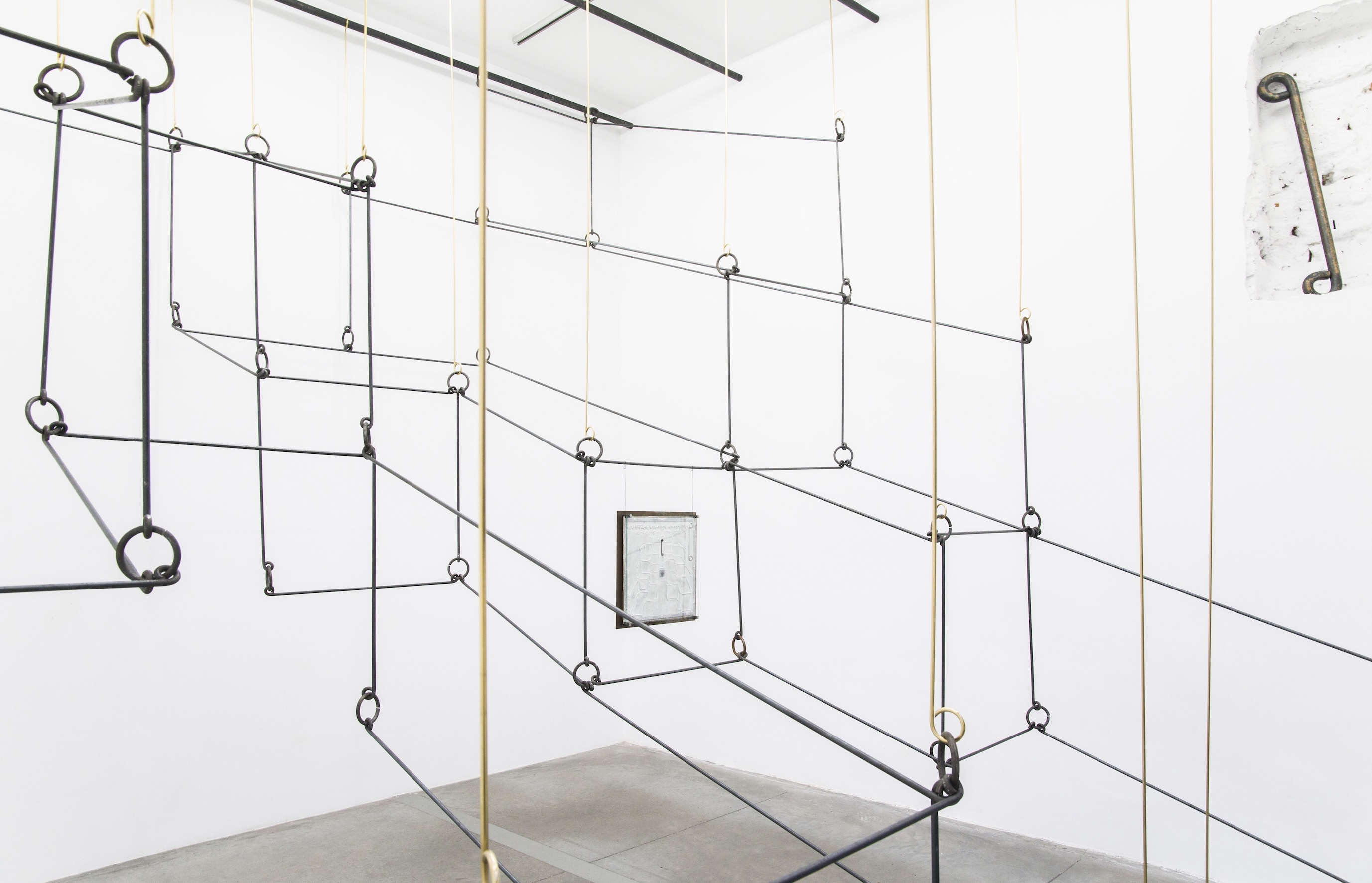
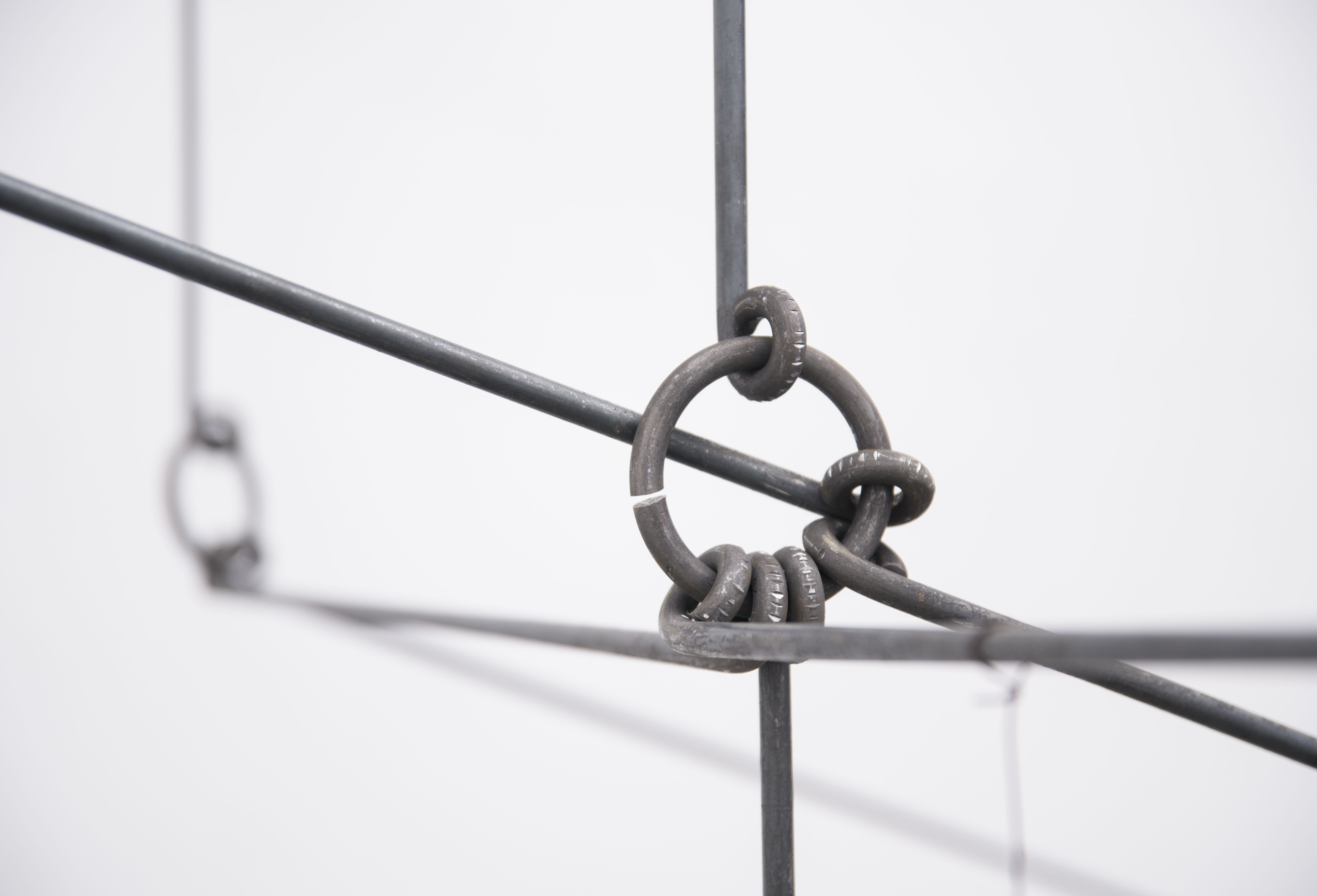
1. In an interview for Kultura.BG, the only culture programme on Bulgarian television, the artist Petar Nakov says that at the beginning of the installation lies the “philosophy” Ex uno (although, if I may make a correction, this is in fact a reference to the Latin maxim Ex uno non fit nisi unum, or From one, nothing comes but one). We might more properly think of what he describes as a formal principle underlying the construction of the installation rather than as its conceptual foundation. The installation’s basic constructive unit is an element which, depending on its rotation, corresponds either to the Glagolitic letter on or to the letter tverdo. A metal module which, through repeated multiplication, reversal, and assembly into the primary form of the cube, generates a complex reinforcing structure that functions as a space within space. A space of tautology and repetition. A network and a system. The letter ceases to be a letter; the grapheme is released from its linguistic, signifying function and becomes a convention. In his book “Empire of Signs”, Roland Barthes describes his encounter with Japanese culture and, in particular, with Japanese calligraphy, which, especially when observed by someone who does not know the language, isolates the signifier and allows the sign and the text to be perceived solely as gesture and rhythm. The first drawings by Barthes, preceding his fascination with the work of Cy Twombly, are dated to the year in which the book was published, following his return to France from his last trip to Japan. These drawings, most of which are now in the collection of the National Library of France, are likely best known from Roland Barthes’s legendary book “Roland Barthes by Roland Barthes”, of which they are an integral part. But are they really drawings? Rather, writing without language, asemic writing, which does not cease to be writing once it has renounced legibility; its purpose. In Barthes, legibility is deferred, but the sign – or something resembling one – remains on the whiteness of the sheet. In Petar Nakov’s work, it, in being deferred, radically materializes and acquires volume. The viewer ceases to stand before something that resembles language and begins to inhabit it. In one way or another.
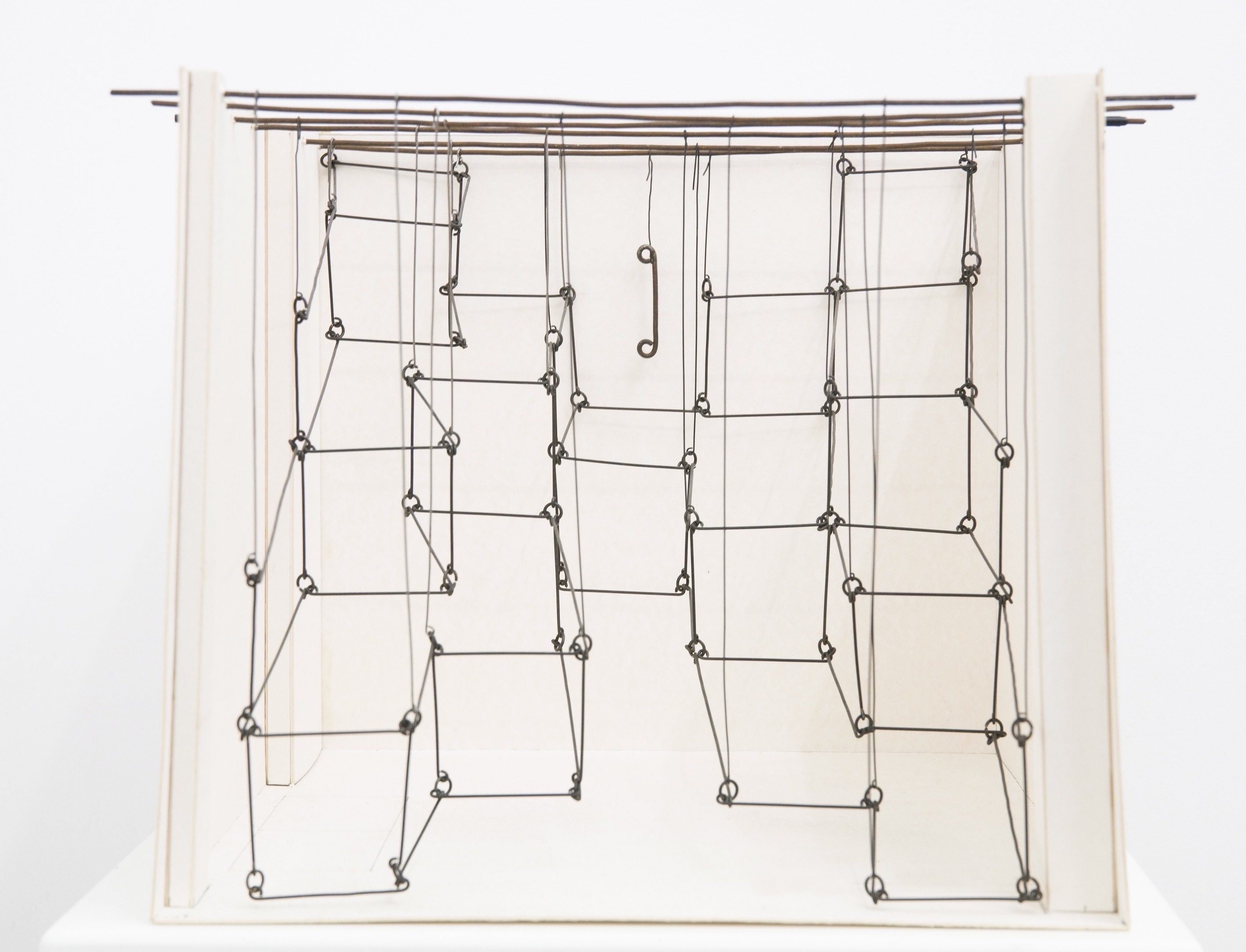
2. Besides the installation, which fills the entire gallery, the exhibition also presents several seemingly supplementary works: a print of the installation project, the cliché for the stamp, as well as a de-scaled object – the enlarged primary element of the installation, made of solid iron (and in fact there is something else as well – an architectural model that remains invisible to the public, hidden in the basement of the gallery). I would not speculate on whether these objects might possess an autonomous status as works of art, nor on whether they precede or derive from the installation. Precisely in this refusal, they reveal different temporal states of the idea; they could hardly be arranged into a stable causal relationship. Rather than narrating the story of its own making, the exhibition stratifies it. The different scales and materializations of the idea coexist within a common system and create a peculiar temporal network in which project and realization – that is, fiction and reality – become entangled in the fragmentation of an otherwise possible narrative.
-
In order to remain faithful to the occasion, I thought that, instead of a conclusion, I might quote the press release for the exhibition once again:
OT becomes a collaborative work between gallery, curator, and artist, uniting the transformation of the institution, curatorial critique of the exhibition model, and an artistic practice that considers space as a living structure.
In the Bulgarian translation of the press release text , “a collaborative work” is translated as “a meeting place”. In this difference lies the true conclusion of the text.
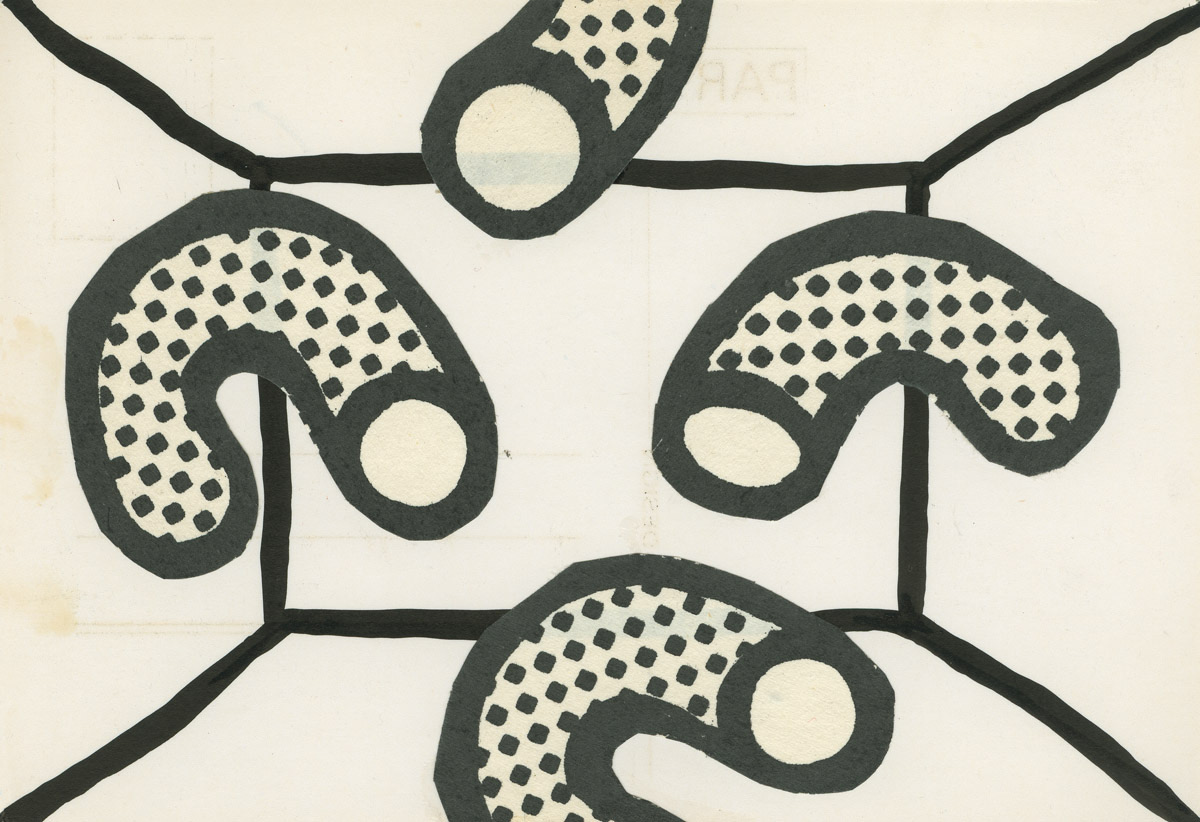
P.S. Allow me to add one more thing: on the website of the Bonotto Foundation, which inherited the extensive collection of Fluxus, visual, and concrete poetry, I discovered a collage by Guillermo Deisler, a Chilean exile in Plovdiv, a close associate and teacher of Vesselin Sariev in the field of visual poetry. It is titled “Plovdiv”.
text by Simeon Markov, July - August 2026
Images
1. The 7th anniversary of artnewscafé; in the background: “TIME PLACE” by Svetlana Mircheva; photo: Pink Tsonk
2. “OT,” Sarieva / Gallery, 2026; photo: Vanessa Popova
3. Veselina Sarieva’s poem “magia naturalis” in the exhibition “Magia Naturalis”, Sariev / Gallery, 2020; photo: Maria Dzhelebova
4. View from the exhibition “OT,” Sarieva / Gallery, 2026; photo: Vanessa Popova
5. “OT,” detail from the installation, Sarievа / Gallery, 2026; photo: Vanessa Popova
6. Petar Nakov, “Model of the spatial site-specific work OT”, 2026
7. Guillermo Deisler, Plovdiv, collage on postcard, 10 x 15 cm; Fondazione Bonotto; Copyright © Deisler, Guillermo, All rights reserved