
Krassimir Terziev
Installation
-
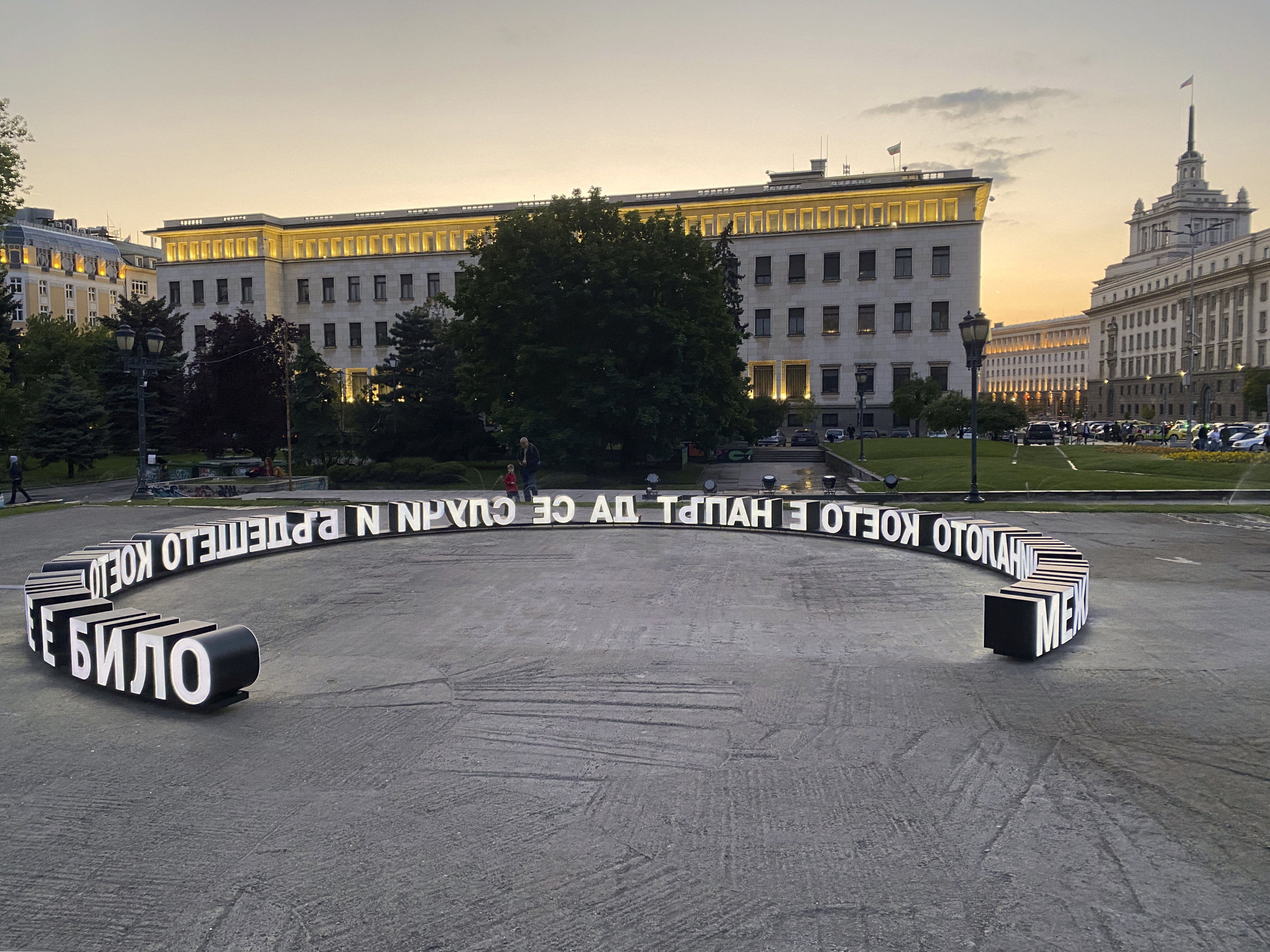 Between the Past That Is About to Happen and the Future That Has Already Been, 2022-24
installation in public space, volumetric double-sided illuminated letters, ø 10 m, height 45 cm, depth 40 cm /// Public art installation on the site of the former mausoleum of Georgi Dimitrov in the centre of Sofia, materialising the sentence “Between the past that is about to happen and the future that has already been”. In contrast to the vertical orientation most monuments rely on, here a structure of a circle laid horizontally on the ground is applied, inviting people to enter the circle, sit on the letters and become part of the work in a symbolic but also quite physically inclusive way. It is the combination between the virtual text, the materiality of the three-dimensional, double-illuminated letters and the people present that makes the work complete. caption: photo Jello Terziev
Between the Past That Is About to Happen and the Future That Has Already Been, 2022-24
installation in public space, volumetric double-sided illuminated letters, ø 10 m, height 45 cm, depth 40 cm /// Public art installation on the site of the former mausoleum of Georgi Dimitrov in the centre of Sofia, materialising the sentence “Between the past that is about to happen and the future that has already been”. In contrast to the vertical orientation most monuments rely on, here a structure of a circle laid horizontally on the ground is applied, inviting people to enter the circle, sit on the letters and become part of the work in a symbolic but also quite physically inclusive way. It is the combination between the virtual text, the materiality of the three-dimensional, double-illuminated letters and the people present that makes the work complete. caption: photo Jello Terziev
-
 Storm Door, 2022
sculpture in open space
Storm Door, 2022
sculpture in open space
steel, aluminium, acrylic glass
200 x 200 x 200 cm Edition 1/3 -
 Universe of Attachments 2020
installation
Universe of Attachments 2020
installation
black plexiglass, plywood
6 x 70 x 50 x 7 cm
AE 3 + 1AP -
 First Row Seats, 2025
modified wooden filmtheater chairs 87 x 115 x 56 cm
First Row Seats, 2025
modified wooden filmtheater chairs 87 x 115 x 56 cm
-
 Storm After Judd, 2025
modified acrylic glass
Storm After Judd, 2025
modified acrylic glass
315 x 61 x 68 cm /// A tribute to Donald Judd. Judd's "Stacks" are a primary example of the modernist grid model. In Terziev's interpretation the purity and universality of that model got compromised. Perhaps due to many processes running at the contemporary moment (climate catastrophy being just one of them). The acrylic glass out of which the boxes are made has been melted by high temperature deforming the rigid geometry of the boxes. -
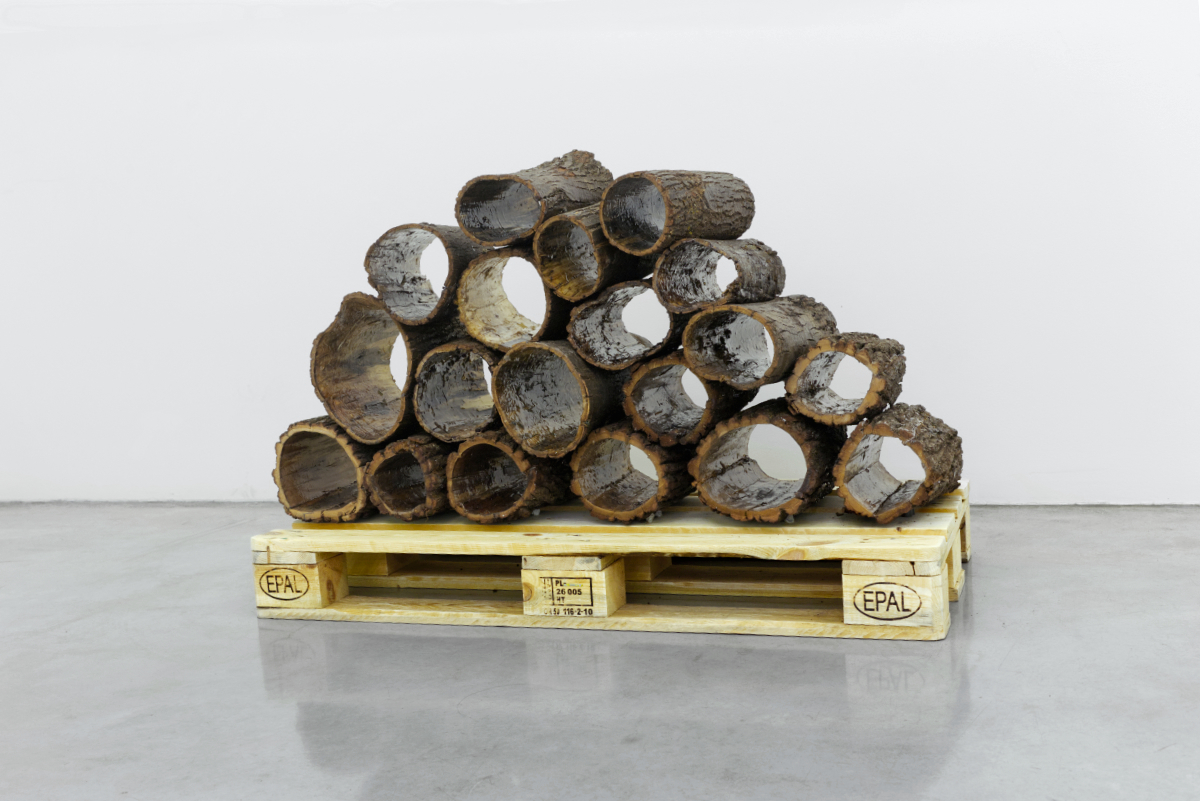 There Are Winters No One Is Prepared For (Spring), 2023
installation, linden bark, polyester resin dimensions variable In virtual worlds, there is growing sophistication in simulating “real-world” mechanics and the laws of physics. The technology to obtain extremely high-definition photo-realistic environments is already here, but it is still a world of surfaces trying desperately to behave as if below and behind them, there is nothing other than calculation. These firewood pieces exist between the real and the virtual. Stripped from their content, they still maintain the perfect idea of firewood.
There Are Winters No One Is Prepared For (Spring), 2023
installation, linden bark, polyester resin dimensions variable In virtual worlds, there is growing sophistication in simulating “real-world” mechanics and the laws of physics. The technology to obtain extremely high-definition photo-realistic environments is already here, but it is still a world of surfaces trying desperately to behave as if below and behind them, there is nothing other than calculation. These firewood pieces exist between the real and the virtual. Stripped from their content, they still maintain the perfect idea of firewood.
-
 Let's Dance / Clothes for Collective Life, 1996
installation eight white shirts (modified), plastic circular support construction, fishing cord
Let's Dance / Clothes for Collective Life, 1996
installation eight white shirts (modified), plastic circular support construction, fishing cord
210 x 260 x 260 cm
edition 3 + 1AP
Object
-
 Monument to the Time Elapsed V, 2020
engraving on TV screen, 48" TV set base
Monument to the Time Elapsed V, 2020
engraving on TV screen, 48" TV set base
98 x 136 x 55 cm /// The series Monument to the Time Elapsed re-appropriates some dead devices (laptop, tablet, TV). On the screen of each piece of equipment is engraved an image of the supposed reflection of its user. The black screen turns out to be a perfect surface for engraving - a technique resembling in many ways the current fashion in the design of tombstones in todays Christian Orthodox world, where the portraits (or sometimes full size figures) of the deceased are engraved on the surface of black granite tombstones. -
 Hot Chairs, 2022
modified Monobloc chairs, unique pieces, non-limited number
Hot Chairs, 2022
modified Monobloc chairs, unique pieces, non-limited number
-
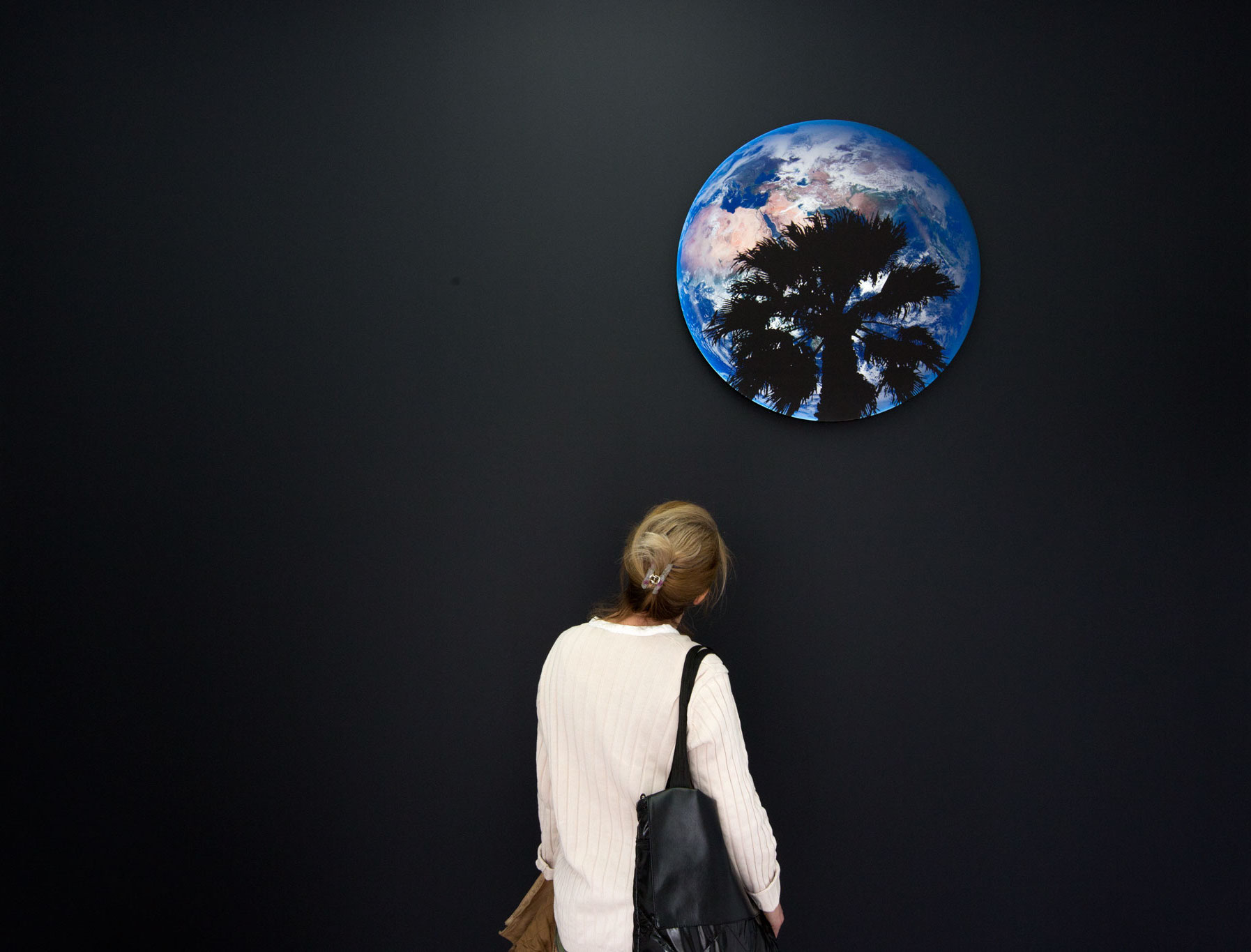 Yet to be Titled, 2018
photomontage
Yet to be Titled, 2018
photomontage
pigment print on canvas, stretcher,
90 cm diameter
wall painted in black -
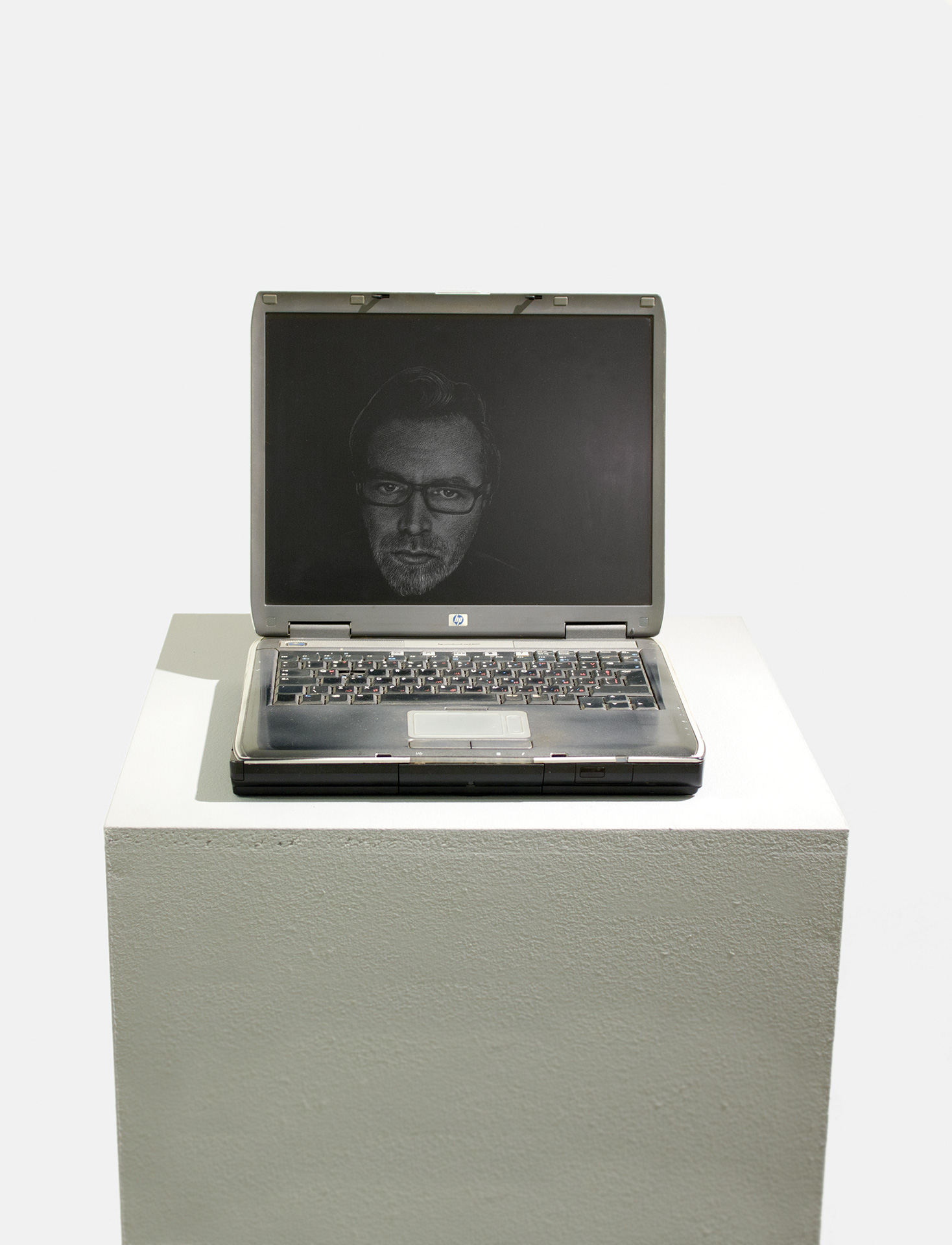 Monument to the Time Elapsed, 2013
defunct notebook, engraved drawing (dry point) on LCD screen
Monument to the Time Elapsed, 2013
defunct notebook, engraved drawing (dry point) on LCD screen
30 x 33 x 27 cm
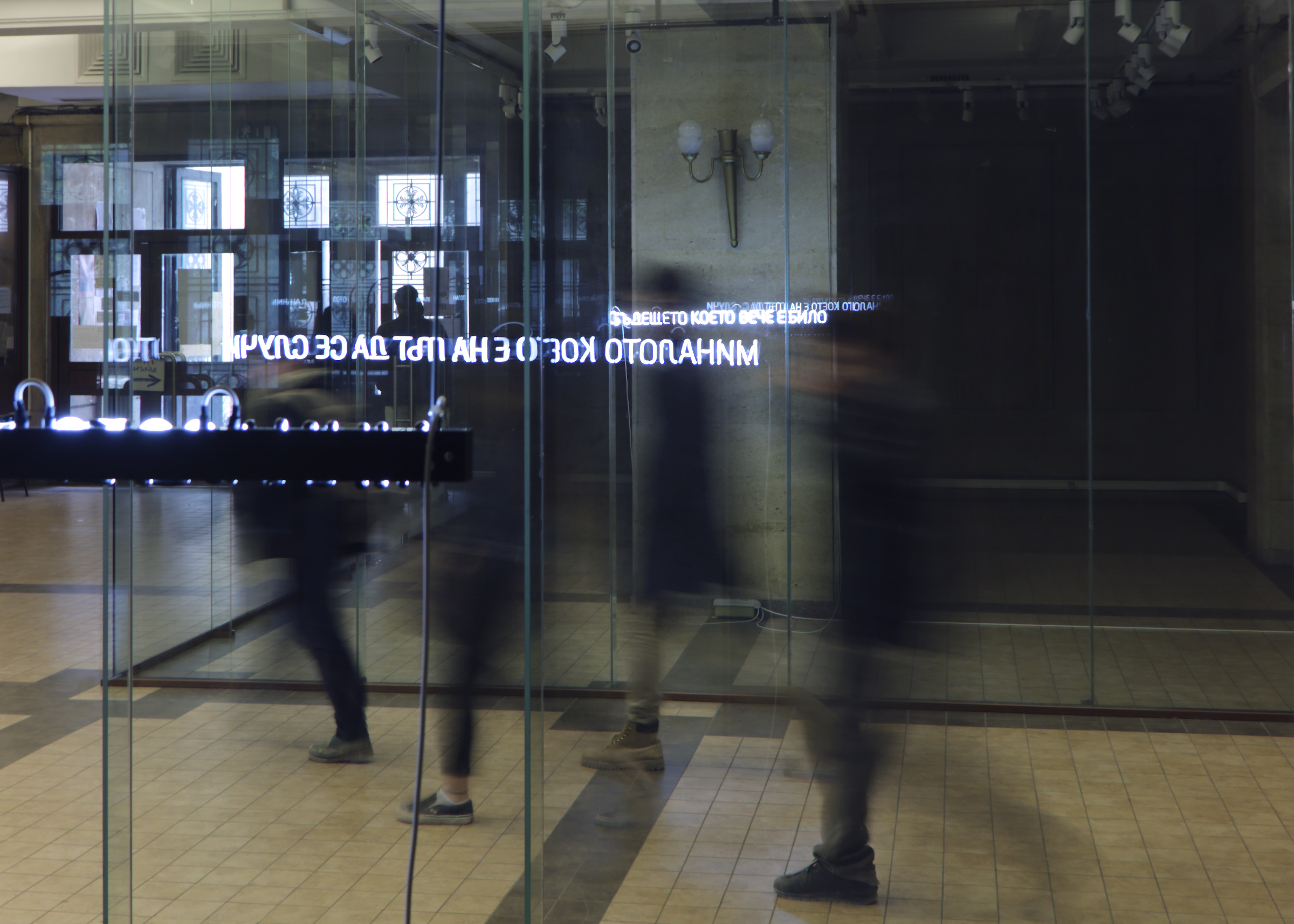
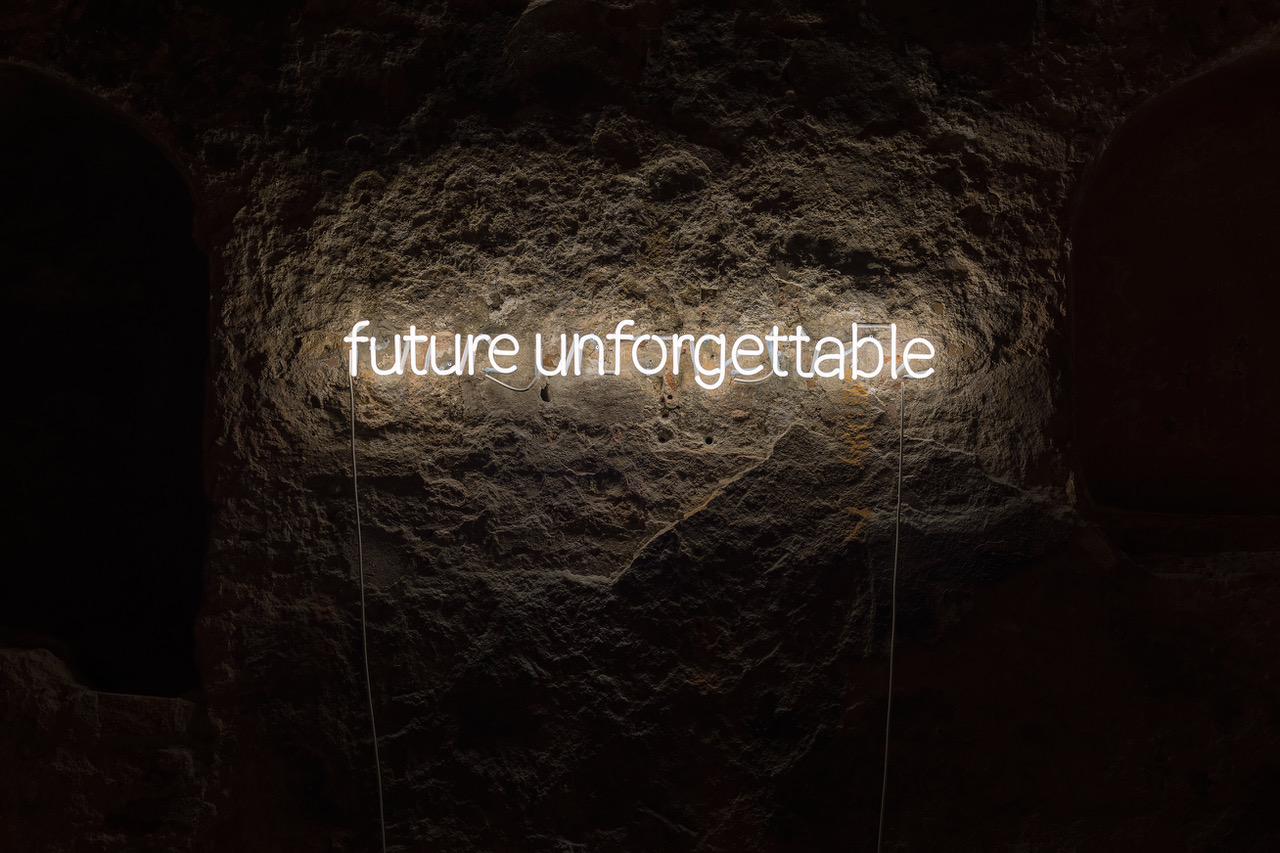
Artworks with Light
Painting
-
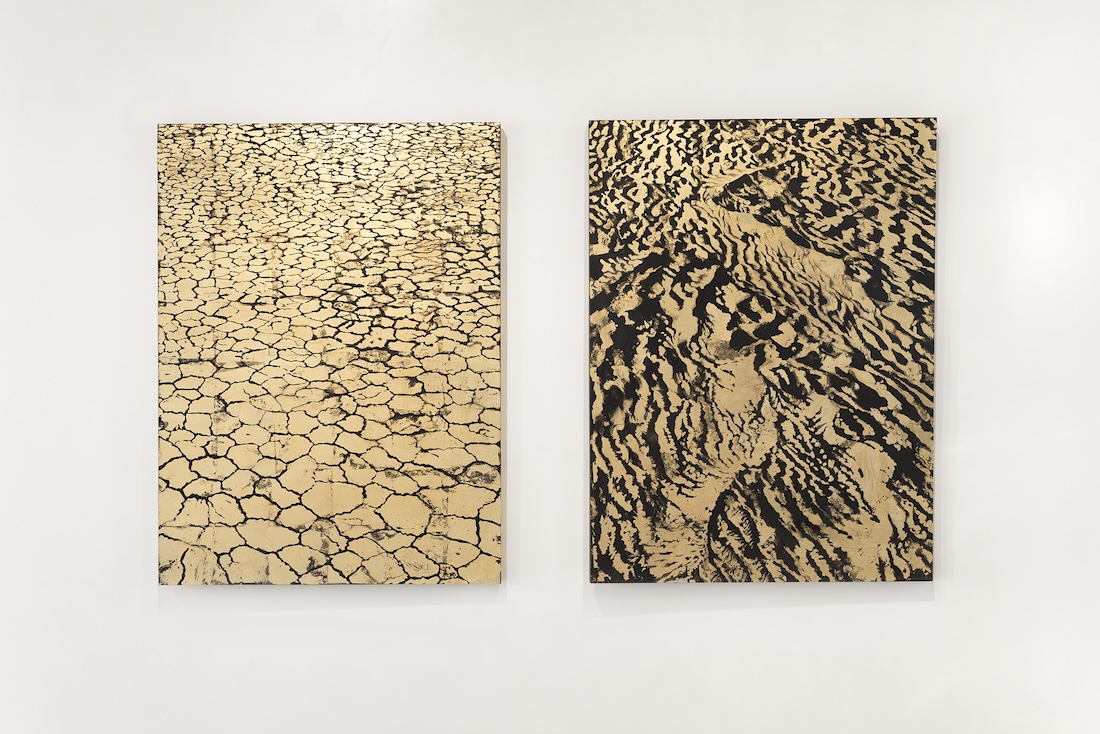 Golden Sands and Organic Grid, 2026
gold leaf, acrylics on
Golden Sands and Organic Grid, 2026
gold leaf, acrylics on
plywood
125 х 93 cm -
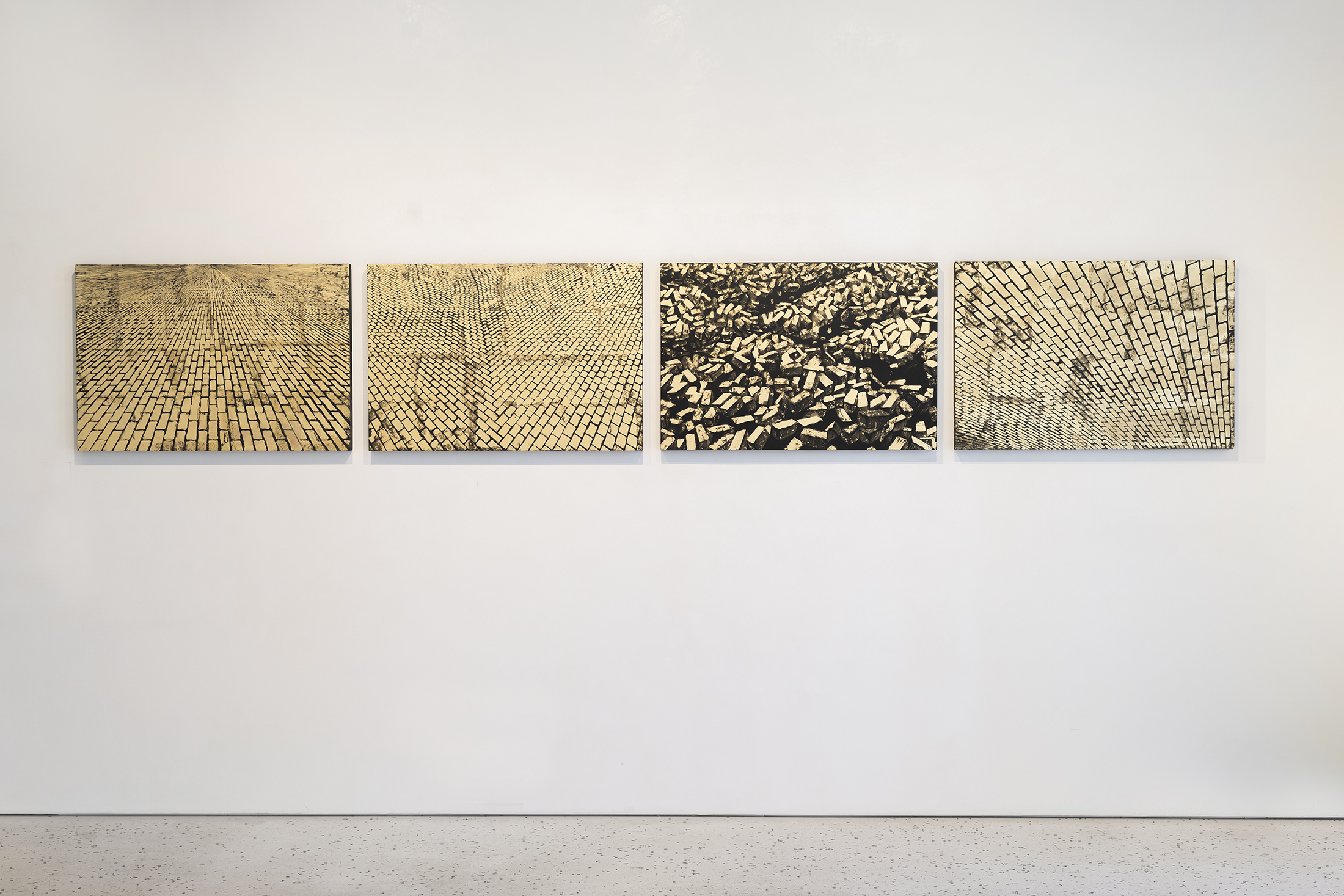 Series Central, 2026
gold leaf, acrylics on plywood
Series Central, 2026
gold leaf, acrylics on plywood
62 х 92 cm each The linear perspective of the symbolic center of the city and the nation - the yellow cobblestones of Sofia - possesses a distinct character. The series Central (2026), executed in gold leaf and acrylic on plywood, explores this character through various constructions: One Point Perspective, Two Points Perspective, No Point Perspective, and Ground for Sky Perspective. The cobblestones are not merely inert material—they carry the weight of gold (worth its weight in gold). There is no room for aerial perspective in this symbolic space; it is pure geometry and significant mater. -
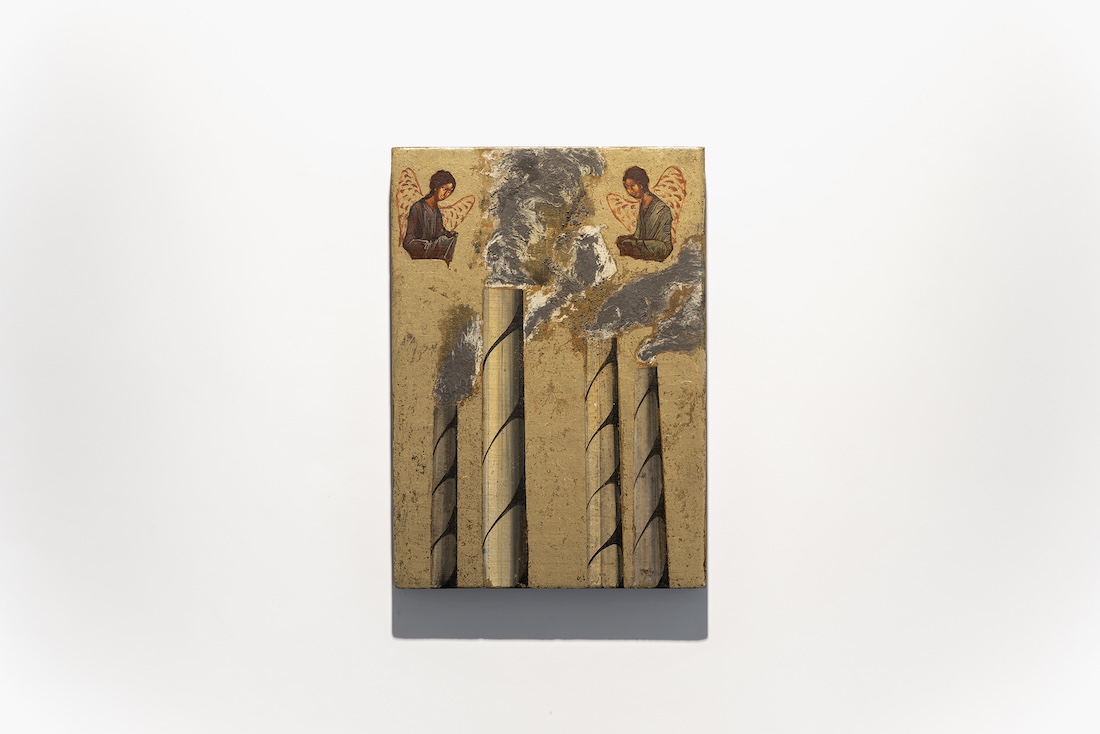 Angels and Chimneys, 1994
gold lief, graphite,
Angels and Chimneys, 1994
gold lief, graphite,
tempera on wood
33 х 23.5 cm -
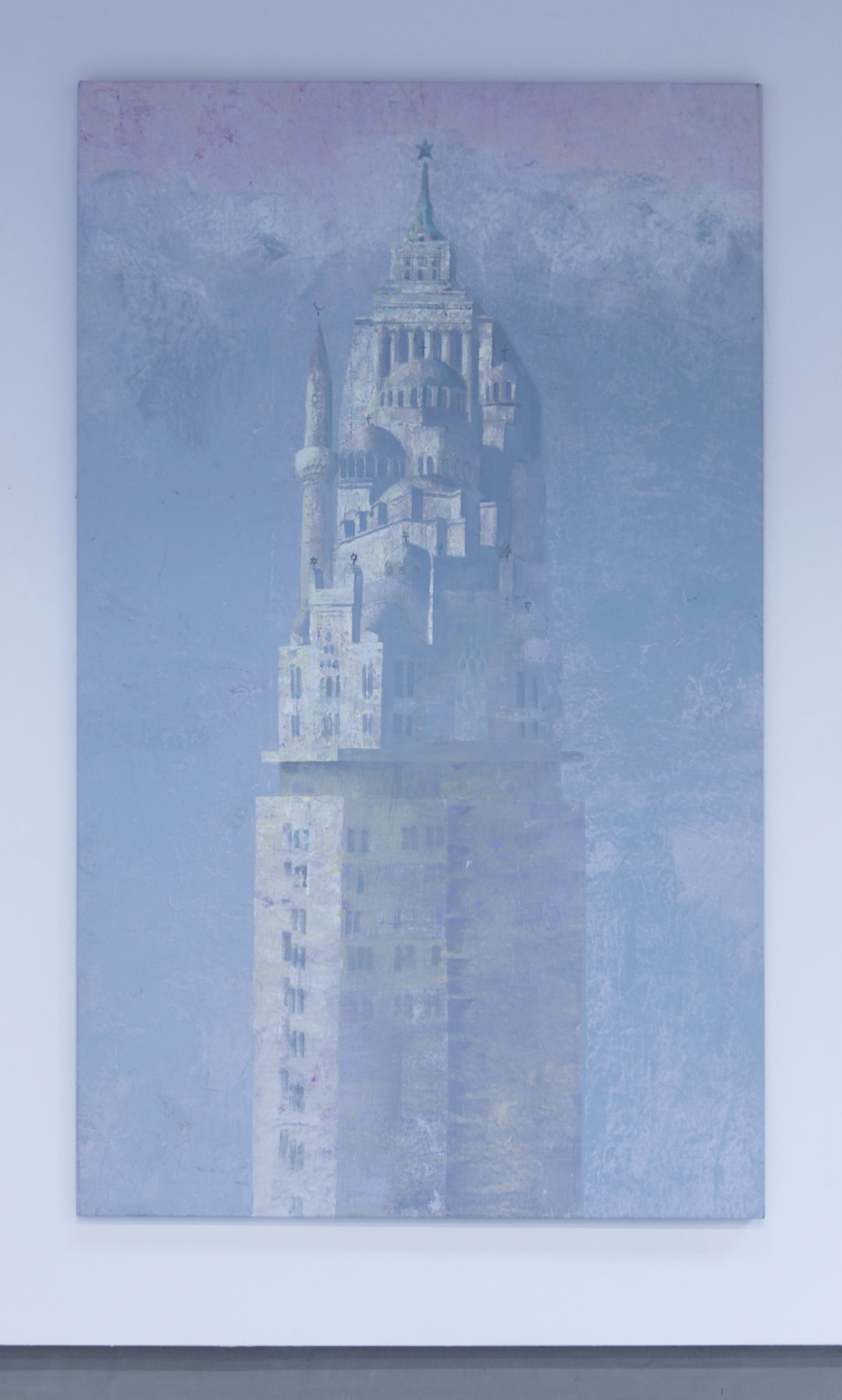 Base and Superstructure (Twilight), 2022
oil on canvas
Base and Superstructure (Twilight), 2022
oil on canvas
200 x 120 cm -
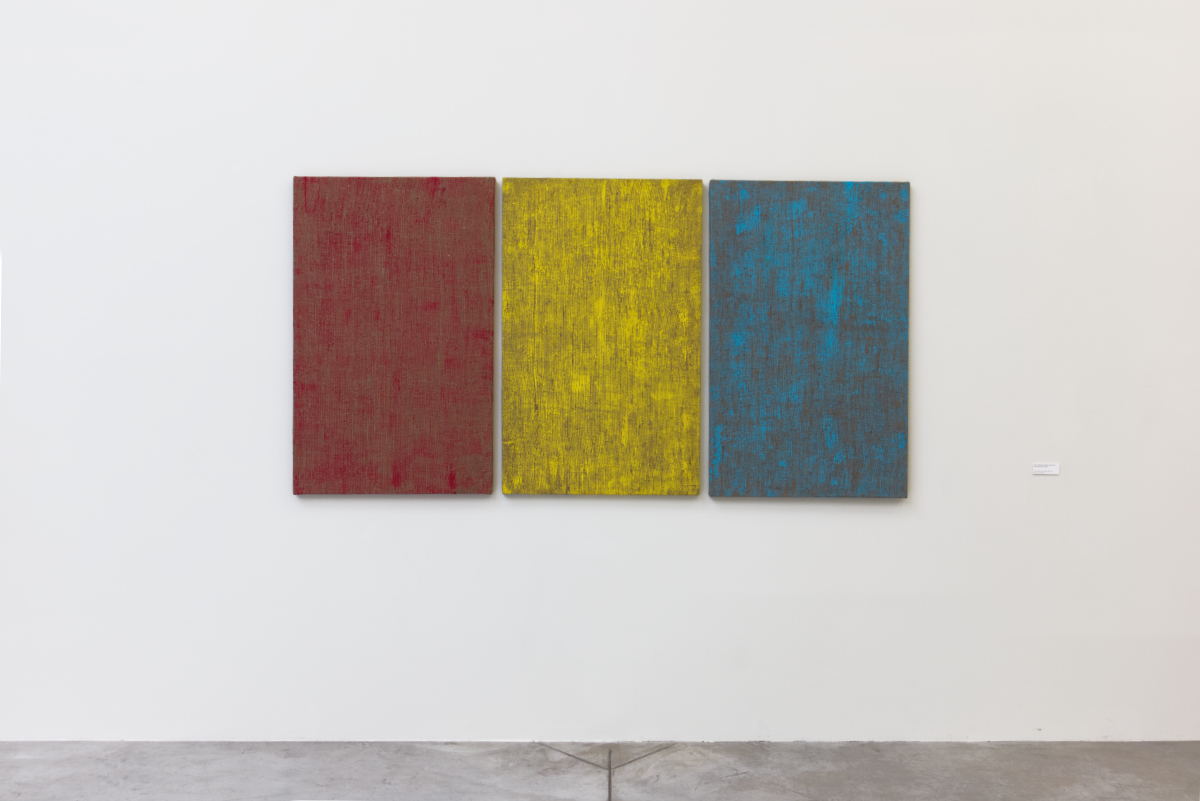 Who’s Afraid of the Other Side, 2022
triptych, acrylic applied on the back of sackcloth, 3 canvases 116 x 73 cm each
Who’s Afraid of the Other Side, 2022
triptych, acrylic applied on the back of sackcloth, 3 canvases 116 x 73 cm each
/// In September 1921, Alexander Rodchenko exhibited three monochrome canvases: "Pure Red Color", "Pure Blue Color" and "Pure Yellow Color". Of the iconic series he wrote: "I have reduced painting to its logical solution by exhibiting three canvases: red, blue and yellow. I confirmed: it's all over. Basic colors. Every surface is just a surface and no representation is intended." Between 1966 and 1970, Barnett Newman made another iconic work that has remained in art history: a series of four canvases titled Who's Afraid of Red, Yellow and Blue, apparently referencing Rodchenko. My reference concerns the surface so important to Rodchenko, showing that every surface has a flip side. In this case the main colours: red, yellow and blue, are applied to the back of the canvas, remaining hidden from the viewer. On the face, only those remnants of colour that have managed to break through the threads of the canvas are visible, as blood or sweat break through the pores of the body's skin. -
 A dialogue, 2002
oil on canvas
A dialogue, 2002
oil on canvas
80 x 100 cm
Drawing
-
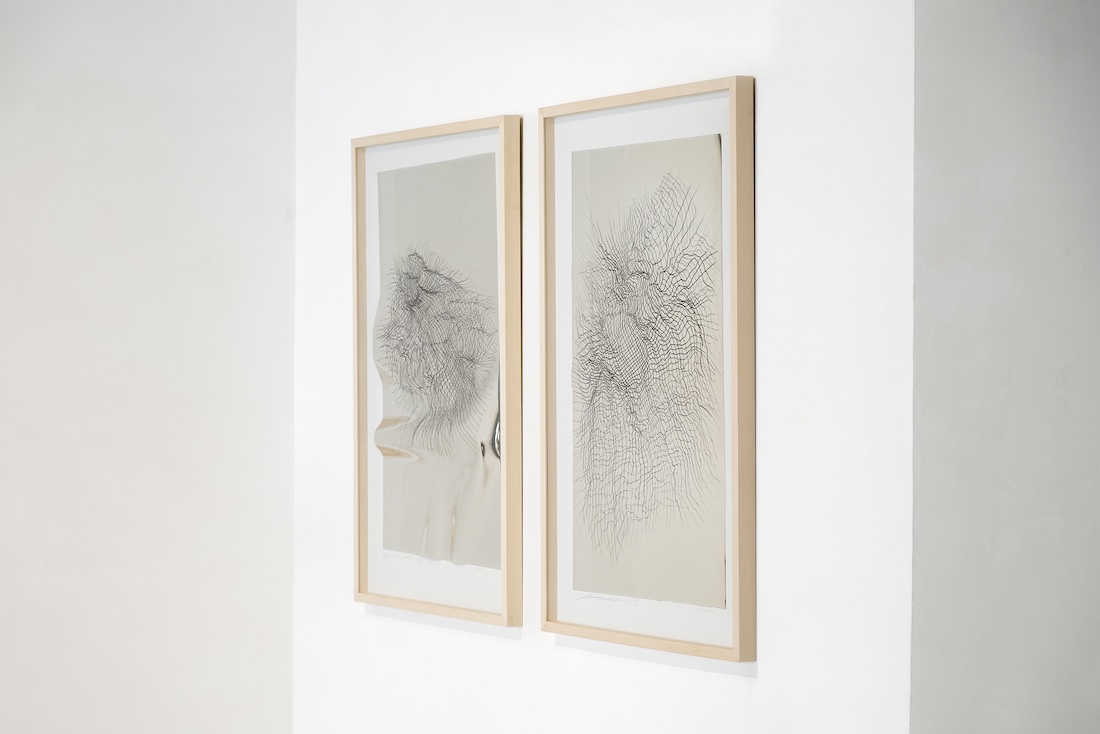
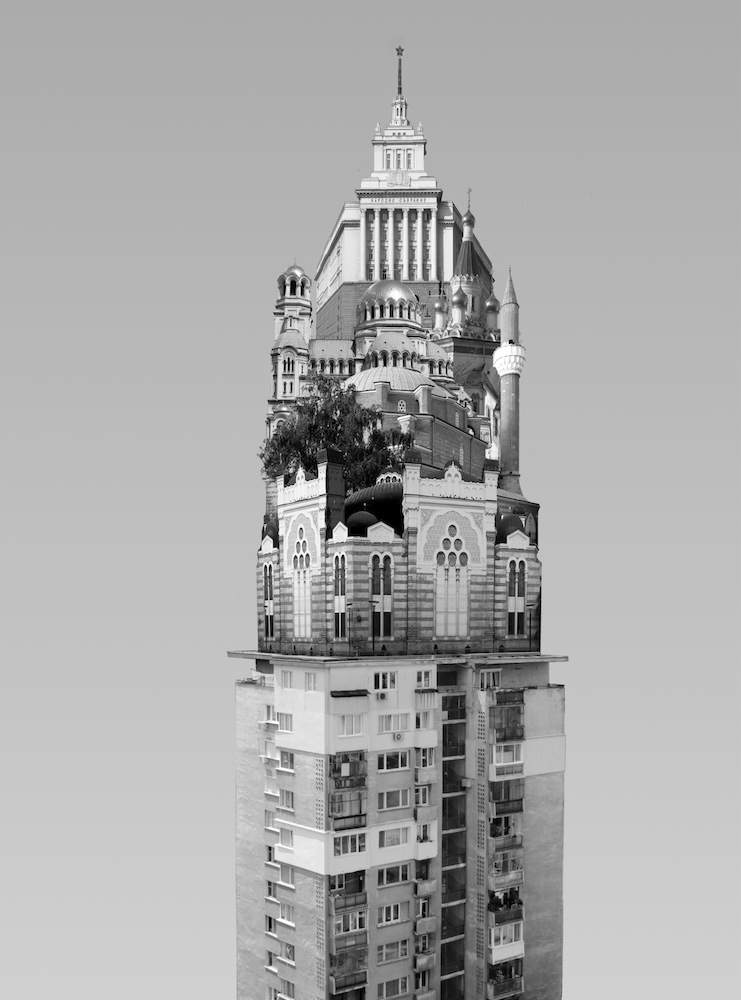 Base and Superstructure, 2026
photomontage
Base and Superstructure, 2026
photomontage
pigment print on Hahnemühle paper (315g)
58 x 42.5 cm
5 +1АР -
 Years Later, 2015
photo and text, pigment print on paper (42/42 cm), printed text (A4), wooden frame 70/100 cm (framed), edition 6 + 1AP /// the printed text July 20th. 1969. The first U.S. flag on the Moon was deployed by Apollo 11 astronauts Neil Armstrong and Edwin Aldrin during their historic moonwalk. The flag was seen worldwide live on television. 1972. Gene Cernan was the last man to step on the Moon. 1969 – 1972. There are six U.S. flags documented, planted on the moon by the Apollo astronauts (Apollo 11, 12, 14, 15, 16, and 17). Thirty-nine Years Later. Since the atmosphere of the Moon is tenuous, the ultraviolet light from the Sun is so intense that it must have faded the colours of each flag shortly after it was planted. What is supposedly left is a white flag standing. However, there are no images documenting this since no one has landed at the same landing site ever again and there are no satellites yet that can capture such detail.
Years Later, 2015
photo and text, pigment print on paper (42/42 cm), printed text (A4), wooden frame 70/100 cm (framed), edition 6 + 1AP /// the printed text July 20th. 1969. The first U.S. flag on the Moon was deployed by Apollo 11 astronauts Neil Armstrong and Edwin Aldrin during their historic moonwalk. The flag was seen worldwide live on television. 1972. Gene Cernan was the last man to step on the Moon. 1969 – 1972. There are six U.S. flags documented, planted on the moon by the Apollo astronauts (Apollo 11, 12, 14, 15, 16, and 17). Thirty-nine Years Later. Since the atmosphere of the Moon is tenuous, the ultraviolet light from the Sun is so intense that it must have faded the colours of each flag shortly after it was planted. What is supposedly left is a white flag standing. However, there are no images documenting this since no one has landed at the same landing site ever again and there are no satellites yet that can capture such detail.
-
 Just as water, gas, and electricity are brought into our houses from far off... 2011
series of photographs, 90/135 cm each
Just as water, gas, and electricity are brought into our houses from far off... 2011
series of photographs, 90/135 cm each
edition 6 + 2AP -
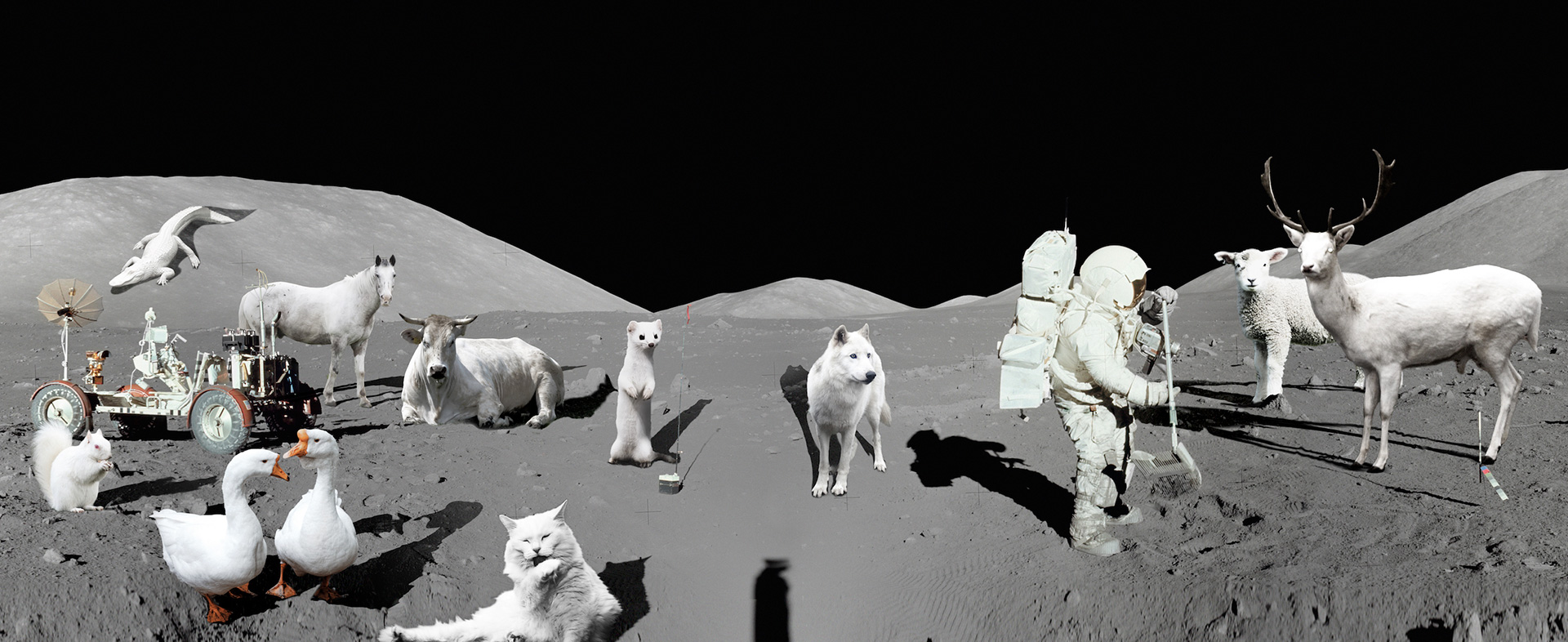 Apollo Albino Programme, 2017
photomontage
Apollo Albino Programme, 2017
photomontage
pigment print on paper mounted on dibond
70 x 170 cm -
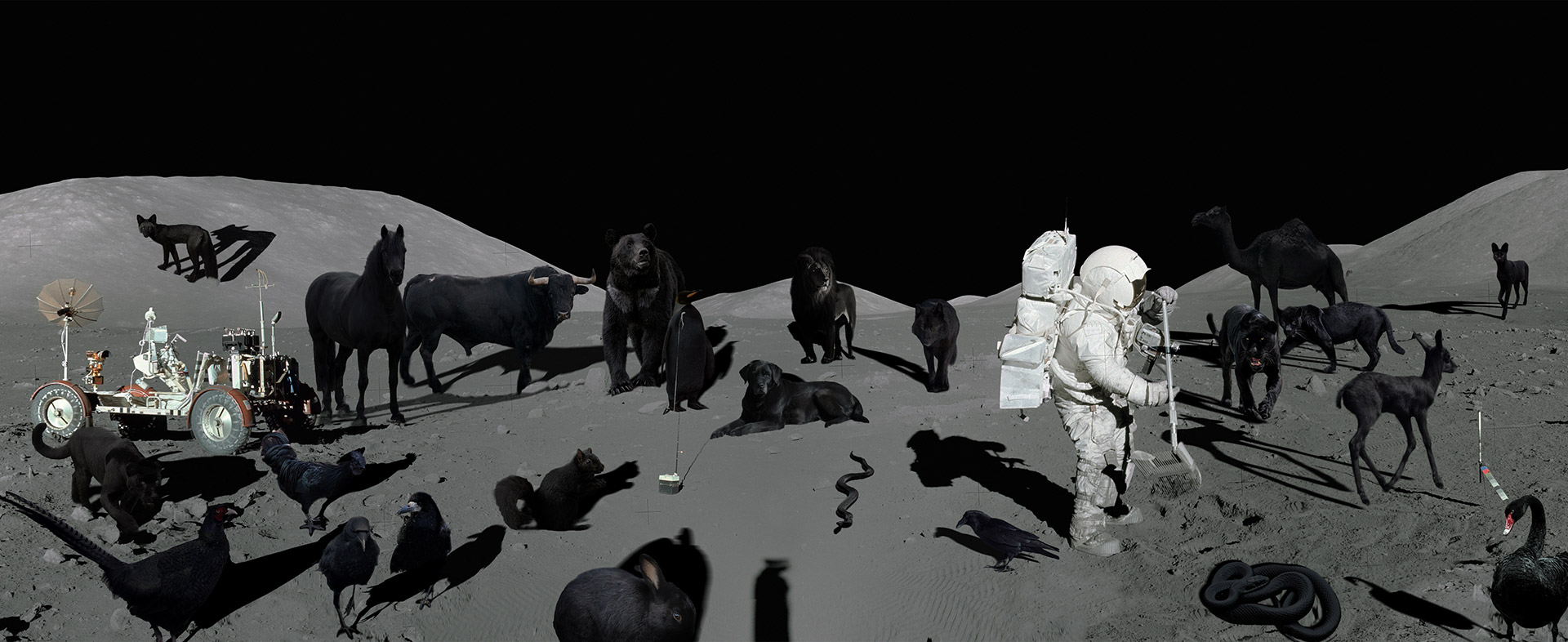 Apollo Melanist Programme, 2018
photomontage
Apollo Melanist Programme, 2018
photomontage
pigment print on paper mounted on dibond
70 x 170 cm
Video
-
 Battles of Troy, 2005
experimental documentary
Battles of Troy, 2005
experimental documentary
52 min, DV, PAL, color, sound
edition 5 + 2AP + 1H/C https://vimeo.com/192766481 -
 A Movie, 2004
two-channel video installation
A Movie, 2004
two-channel video installation
27:51 min, DV, PAL, 4:3, color, no sound
edition 3 + 1AP
https://www.youtube.com/watch?v=EquS-Jozgmc -
 A Place (Playground), 2004
video, 12 min, DV PAL, 4:3, color, sound
A Place (Playground), 2004
video, 12 min, DV PAL, 4:3, color, sound
series of photographs, 80x106 cm each
edition 3 + 2AP
https://vimeo.com/271093406 -
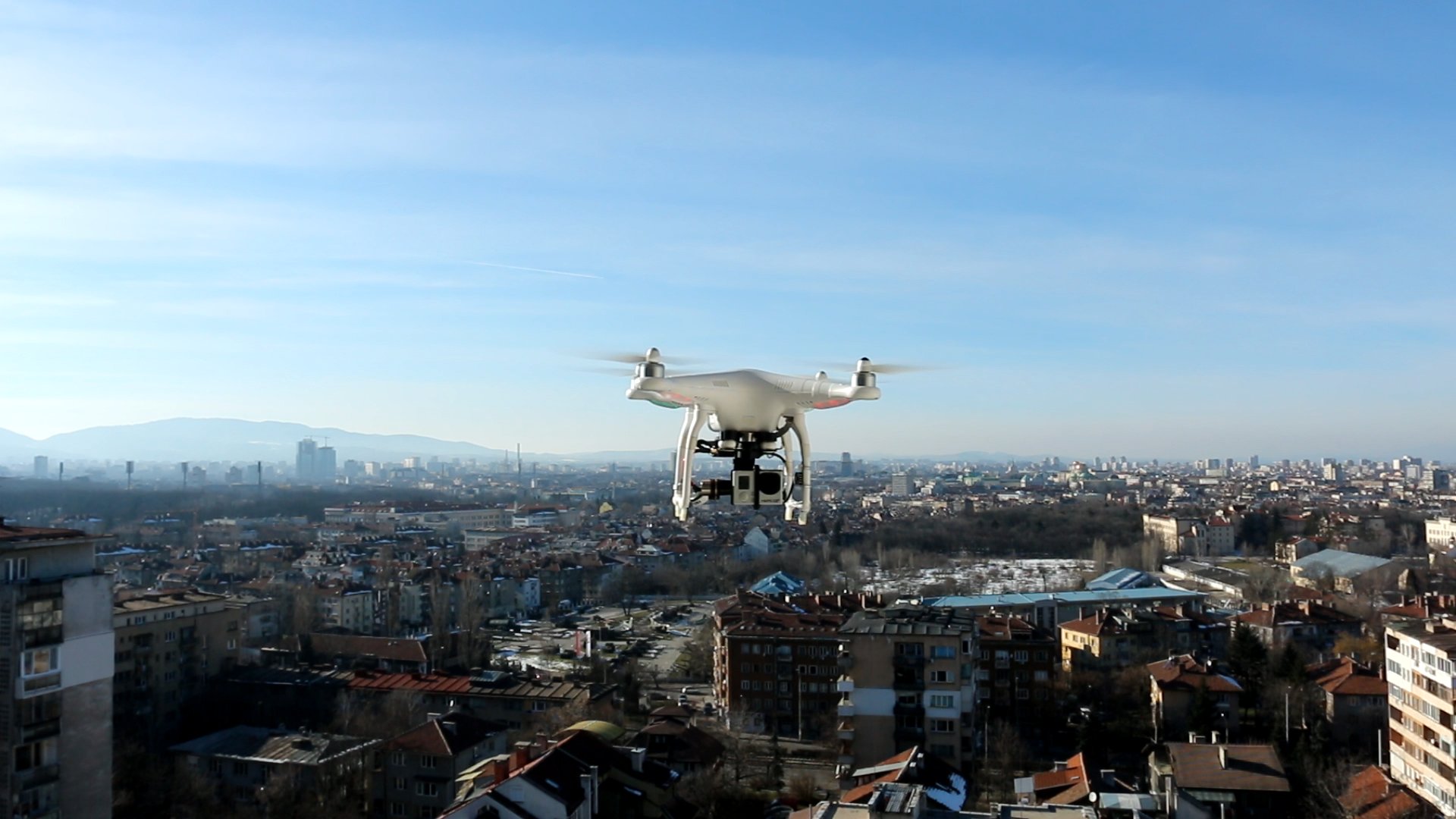 Between Flashback and Déjà-vu II, 2016
video
Between Flashback and Déjà-vu II, 2016
video
9 min, HD 1080P, PAL, colour, sound Watch the video trailer here